|
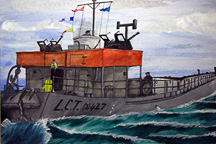
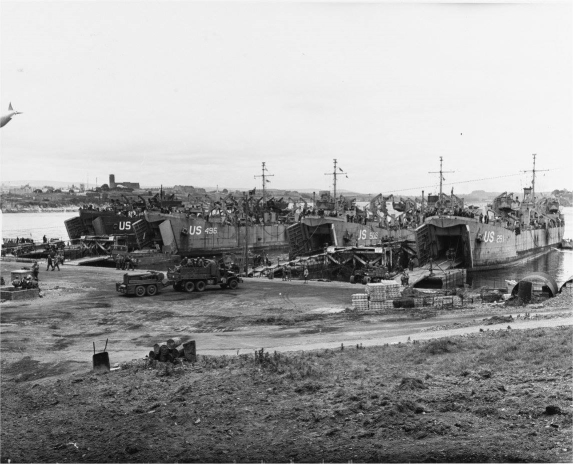
A team of divers from Southsea Sub-Aqua Club will try to solve the mystery of how 2 tanks, 2 bulldozers and a field gun, believed to be linked to D Day, came to rest on the sea bed 8 miles offshore in Bracklesham Bay, West Sussex. The historic WW2 armoured vehicles and gun lie jumbled up on the sea bed at a depth of 20m but there is no known associated shipwreck nearby. The divers plan to spend 5 days surveying the site and will attempt to establish how the equipment came to rest on the sea bed. Information gathered on an initial dive has revealed, to everyone’s surprise, that the Tanks are likely to be Centaur CS IV tanks a limited number of which were exclusively assigned to the Royal Marines Armoured Support Group for Operation Overlord. A total of 80 Centaurs were to be used on D Day but only a small number actually made it across the English Channel and landed on the Normandy beaches. One Centaur tank now stands as a war memorial at the famous Pegasus Bridge in Normandy. The bulldozers are also believed to be very unusual, in that they were specially armoured Caterpillar bulldozers, one of a series of modifications to different types of war equipment known as Hobart’s “Funnies”. This type of bulldozer was used by the 79th Armoured Division of the British Army. Little is known about the modifications made and there are no known surviving bulldozers of this type. So how did these war machines end up at the bottom of the sea? The local theory is that the vehicles were lost from a bridge section of one of the artificial (Mulberry) harbours, though it is now believed by the diving team that it is more likely that they were lost from the deck of a Landing Craft Tank (LCT). In rehearsals for D Day, known as ‘Exercise Fabius III’, a number of vessels carrying British and Canadian troops and equipment came under attack by German E boats in Bracklesham Bay which may have resulted in the loss of the tanks. Alternatively, the military vehicles may have been lost in rough seas on the crossing to Normandy for the D Day landings on 6th June 1944. The diving team hope to establish exactly what happened. The project, which is being lead by Alison Mayor, has the approval of the Ministry of Defence and will start on 26 July. Teams of 12 divers will be taking measurements, photographs and video of the site to record the location, orientation and condition of the military vehicles and will also conduct a survey of the marine life which has made its home on the wrecks. “It’s a real puzzle how the tanks and bulldozers came to rest so far offshore when there is no shipwreck nearby. These war machines are of significant historical interest and we hope to find the clues that will help solve the mystery of how and when they sank below the waves.” 
Photos: (Left) Diver inspects tank wheel sprocket (Martin Davies) - (Right) D-Day Centaur Tank (Courtesy Bovington Tank Museum) The project has received a grant from the British Sub-Aqua Jubilee Trust and is supported by Silent Planet Ltd, Portland. The Tank Museum at Bovington, has provided assistance in the identification of the wrecks. Any information or comments about D Day activities in the Bracklesham Bay area or to find out more about Southsea Sub-Aqua Club visit the club web site
This e-mail address is being protected from spambots, you need JavaScript enabled to view it
or please write to Southsea Sub-Aqua Club, Fort Widley, Portsdown Hill Road, Portsmouth PO6 3LS. Related Links: BSAC Press-Room: LINK Portmouth News: LINK |